Jan & John Maggs
Antiques and Art
Pinchbeck
~ ~ ~ ~ ~ ~ ~ ~ ~ ~ ~ ~ ~ ~ ~ ~ ~ ~ ~ ~ ~ ~ ~ ~ ~ ~ ~ ~ ~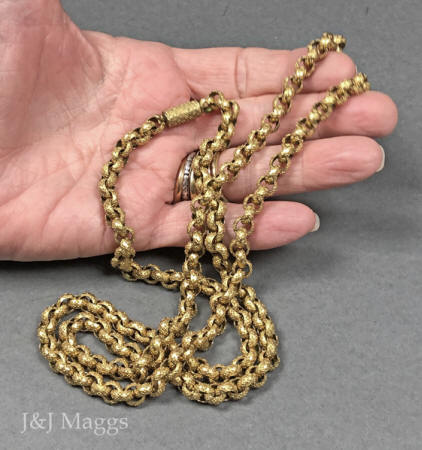
*Christopher Pinchbeck, also called Catarrón (c. 1670 – 18 November 1732) was a London clockmaker and maker of musical automata. He was born in Clerkenwell, England, but worked in Fleet Street. He is the most famous member of the Pinchbeck family, which took its name from a small village in Lincolnshire. In the 18th century Pinchbeck invented his eponymous alloy, a cheap substitute for gold. [Pinchbeck: an alloy of copper and zinc (about 83 to 17) that was invented c. 1720 by Christopher Pinchbeck (1670-1732).] It resembled, but was much lighter than, gold, and was used in making inexpensive jewelry including watch-cases, chatelaines, chain, buckles, clasps, snuff boxes, etuis, etc. It was also used in France, known there as ‘pinsbeck’ and ‘pinsebeck’. [n.b. His sons Edward (1713-1766) and *Christopher (1710-1783) succeeded him.] He made an exquisite musical clock, worth about £500, for Louis XIV, and a fine organ for the Great Mogul, valued at £300. His eldest son, also named Christopher (1710–1783) became King's Clockmaker by appointment to George III: among his timepieces is an important astronomical clock made for the King, now in Buckingham Palace.
~ ~ ~ ~ ~ ~ ~ ~ ~ ~ ~ ~ ~ ~ ~ ~ ~ ~ ~ ~ ~ ~ ~ ~ ~ ~ ~ ~ ~

Use your browser's "back" button to return to the page,
or click the picture to visit the Jan & John Maggs home page